EU Alumna, Megi Shubalidze, on Environmental Protection and Sustainable Business

Megi Shubalidze studied a BSc (Hons) in International Business at our Munich Campus. Following the support and encouragement of her teachers, she decided to pursue a career in her passion for the environment.
After her studies, Megi moved back to her home country of Georgia, where she has since studied a master’s degree in environmental management and policy, and held several positions in environmental protection and sustainability. She currently lectures on environmental technologies, sustainable finance, circular economy, and climate change at the Georgian Institute of Public Affairs and the Caucasus Green Academy, while also providing consulting services in environmental sustainability and green transition.
Read on to find out how Megi built her career and learn from her insights into the world of sustainable business.
Why did you decide to study at EU Business School in Munich?
I initially began my studies in Georgia, but after the first semester, I realized that I needed a different academic environment and program structure. I was looking for a more dynamic, internationally oriented and practically focused education. Although I speak German at a C1 level, I wanted to study in English to strengthen my international profile and pursue a career in global sustainable business. I specifically looked for international schools with diverse student bodies and was introduced to EU Business School in Munich through an educational agency ELL. The school’s strong focus on international business, English-taught programs and multicultural environment made it the ideal choice for me.
Could you tell me about your career journey since you left EU Business School?
I wanted to continue my studies in Germany, but as it was the peak of the COVID-19 pandemic, I decided to enroll in a master’s in environmental management and policy program back in Georgia. During my studies, I was listed as a top student in my field, and was offered an internship program in the Ministry of Environmental Protection and Agriculture of Georgia.
After relocating to Georgia and beginning my professional career, it became more challenging to consider moving back to Germany due to growing responsibilities, established professional networks, and new opportunities that emerged locally. I found a job at an NGO, Caucasus Network for Sustainable Development of Mountain Regions, and I worked there as an executive assistant intern before becoming a project coordinator at the Environmental Information and Education Centre, part of the Ministry of Environmental Protection of Agriculture of Georgia. I was then invited back to the NGO to be a program associate, where I helped implement projects in South Caucasus, working with Turkey, Armenia and Azerbaijan. We collaborated with educational institutions regarding climate change, disaster risk management and various other issues.
Following my studies, I began working with USAID as a Technical Assistant and was later promoted to Project Specialist. In this role, I helped manage private sector grants with a focus on solid waste management and environmental initiatives. It was a highly rewarding experience, both professionally and personally, thanks to the impactful work and a supportive, collaborative environment. However, upon the successful completion of the program, I transitioned to new opportunities. I joined the UN Global Compact Network Georgia as an Environmental Protection Manager, where I worked on a variety of programs supporting over 160 businesses in aligning with the UN Sustainable Development Goals (SDGs). In this role, I led the development and implementation of environmental initiatives, focusing on corporate sustainability strategies, SDG integration, circular economy, sustainable finance and GHG Emissions target-setting. My work involved delivering tailored guidance, capacity-building courses and strategic support to help businesses enhance their environmental performance and contribute to national and global sustainability agendas.
After that, I joined the newly launched USAID Private Sector Development Program as the Environmental Impact Advisor. However, following the change in U.S. administration and the subsequent decision to close down USAID programs, the initiative was terminated, leaving me and over a thousand professionals across Georgia without positions. Despite this unexpected transition, I have continued my work in lecturing and consulting, and I remain actively engaged in new professional opportunities on the horizon, with a clear focus on building my future in the academic field.
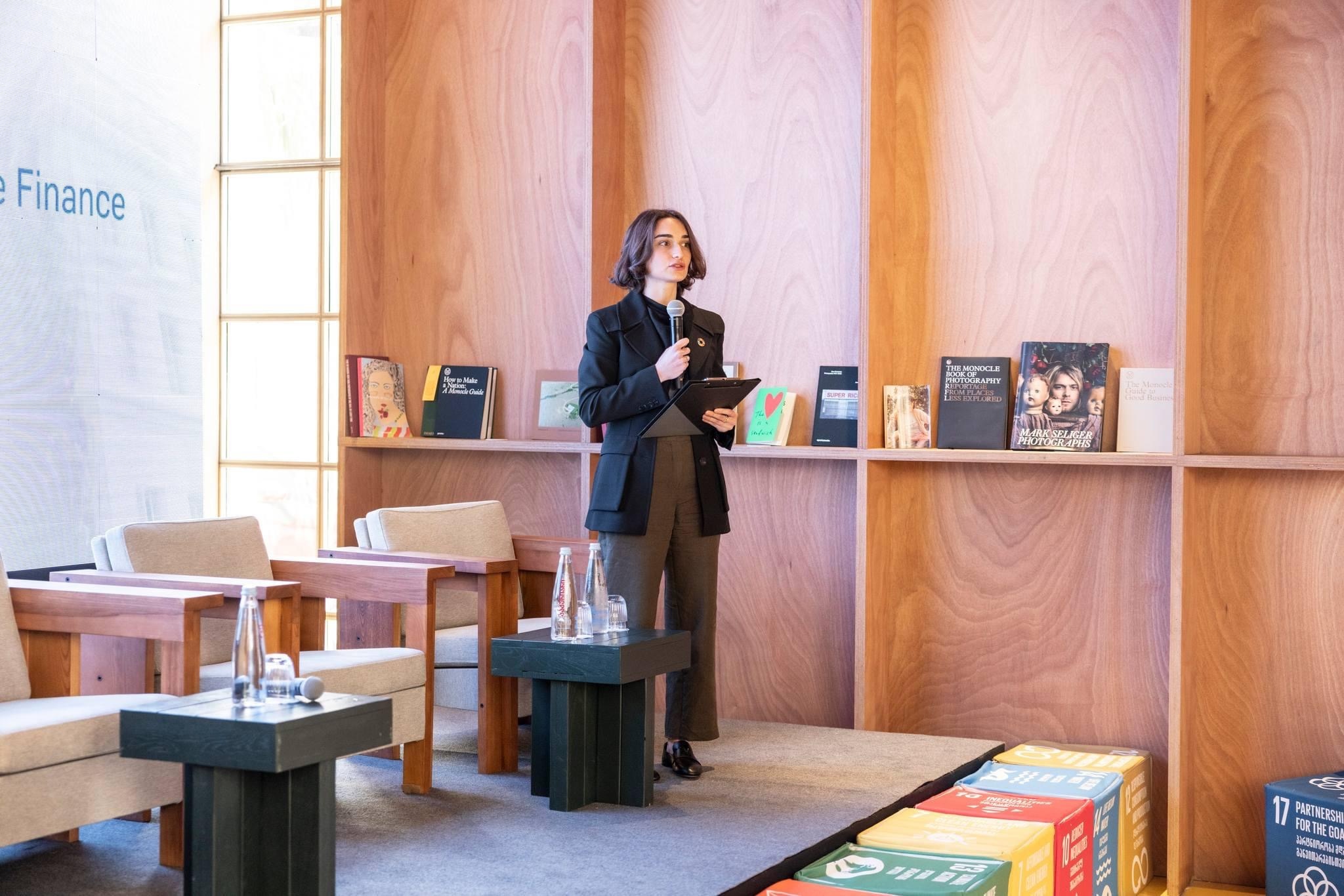
What area of sustainability and environmental protection are you most passionate about and how did you first get interested in this field?
My concern for the environment began in childhood, that was the time I developed a strong awareness of issues such as waste, pollution and food safety, driven by a desire to understand how everyday products impact both human health and the planet. I made a habit of carefully reading all the labels on products whether food, clothing, kitchenware or personal care items to identify potentially harmful chemicals such as formaldehyde, phthalates, PFAs and microplastics. This early attention to detail reflected my commitment to protecting people from environmental hazards, a practice I continue to this day. At the time, I never imagined that this passion could evolve into a profession. That changed when I enrolled at EU Business School, where two inspiring female professors, Ellen Pabst von Ohain and Marta Collongues de Kaiser, helped me realize that I could channel my environmental interests into a meaningful career. Seeing them as successful professionals working in the field of sustainability and business ethics motivated me to take my commitment to the next level.
While my areas of focus continuously evolve as new challenges and opportunities emerge, I remain particularly passionate about waste management and the circular economy. Additionally, ESG principles are a key priority for me, as I believe they are essential in driving responsible, transparent and resilient business practices in today’s rapidly changing world.
How can you ensure that companies see environmental risks?
The foundation is raising awareness, which remains the primary goal for any environmental organization. However, this is a significant challenge because efforts often reach individuals rather than the company as a whole. Even in my teaching, I notice that students sometimes feel overwhelmed by the scale of the issues.
Our lifestyles profoundly impact both our health and the planet, and without effective government regulations, encouraging widespread corporate responsibility remains difficult. Of course, legal tools and regulations are essential and effective in setting minimum standards. However, there are many actions that only companies themselves, taking full responsibility, can implement to drive meaningful environmental progress. True change requires a combination of strong legal frameworks and proactive corporate commitment.
How would you describe a sustainable economy?
The general definition of a sustainable economy is conducting business in a way that does not deplete natural resources, ensuring that we leave enough for future generations while protecting the planet. It balances economic growth with environmental stewardship and social well-being.
Many people assume that being in the environmental field means opposing business, but that’s not the case. I support economic and technological advancement, but we must ensure that no one is left behind. Inclusivity is essential to a sustainable economy because countries differ widely in terms of budgets, regulations, government capacities and education levels. Not every country can keep pace with the developed world.
Therefore, to build a sustainable economy, we need to use all available tools—policy, innovation, education and collaboration—to foster growth that is environmentally responsible and socially equitable.
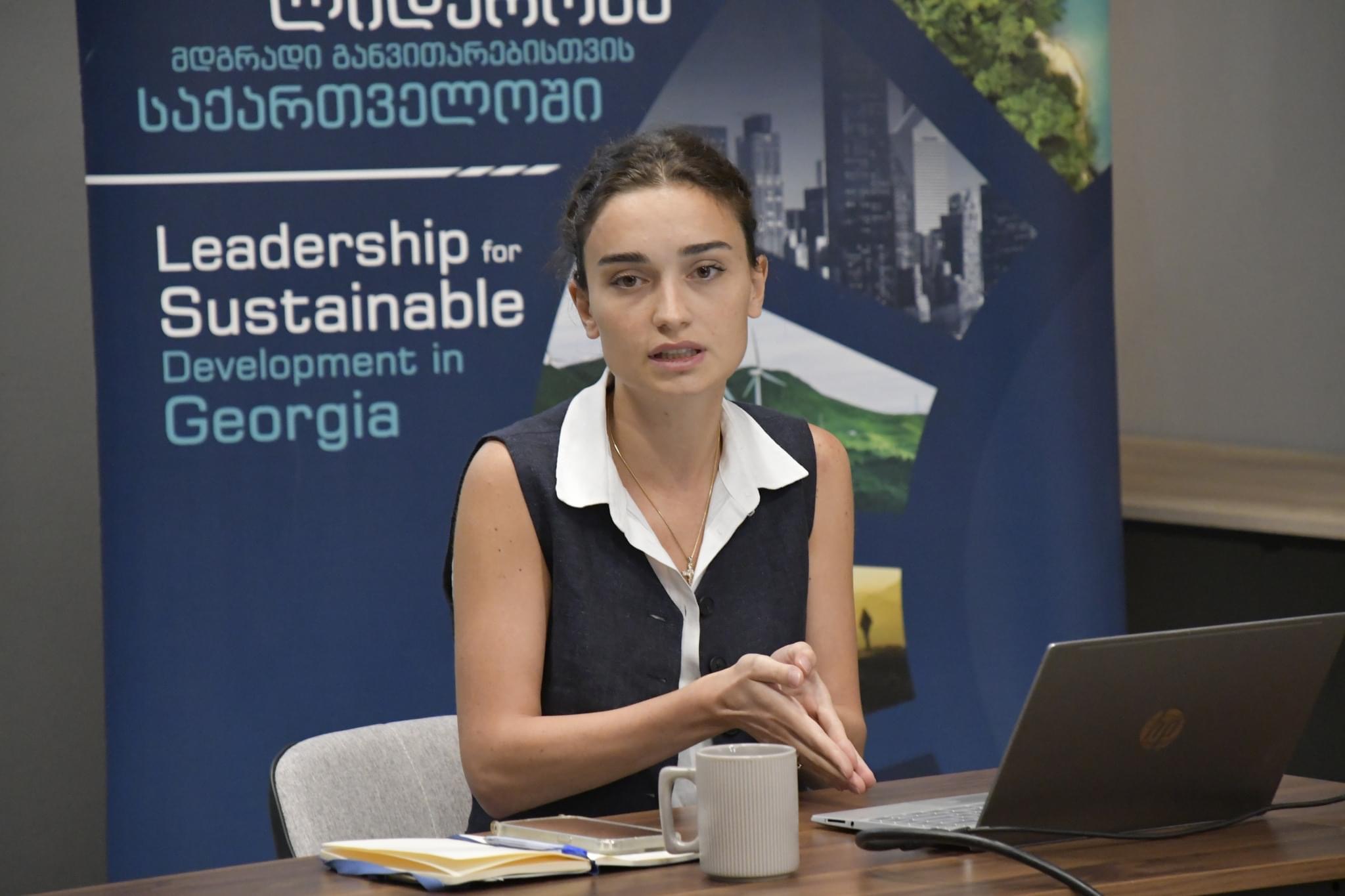
How can we guide investments toward sustainable projects?
Driving investments into sustainable projects requires sector-specific approaches, but Georgia’s adoption of the EU taxonomy for sustainable finance sets an important precedent. Banks are obligated to report their ESG financing portfolios, enhancing accountability and encouraging the flow of capital to environmentally and socially responsible businesses. This approach helps build a more sustainable economy by aligning financial incentives with sustainability goals. We can guide investments by creating financial incentives such as green bonds, sustainability-linked loans, tax benefits or subsidies that make sustainable projects more attractive and financially viable. These tools help shift capital flows toward projects with positive environmental and social impacts.
Encouraging partnerships between governments, financial institutions, the private sector and civil society can help mobilize resources for sustainable projects. Collaborative platforms can share best practices, pool funding and create supportive ecosystems for green investments.
How can we combat greenwashing?
Greenwashing is a complex and significant issue that requires a multifaceted approach. The key to prevention is raising awareness, especially among larger companies, as they often benefit most from misleading sustainability claims.
In today’s digital era, where social media and online marketing have tremendous influence, greenwashing has become an even more powerful tool to shape consumer perceptions. However, this power can be mitigated if consumers are equipped with the knowledge and skills to fact-check and critically evaluate sustainability claims. A particular challenge is that many influencers promote products without fully understanding the environmental impact or the accuracy of the claims, often driven primarily by compensation. This lack of awareness among influencers further emphasizes the need for consumer education and critical thinking.
From the consumer’s perspective, combating greenwashing means being informed about product origins, sourcing practices and supply chains. When customers know how to research and verify this information, greenwashing becomes much harder to sustain.
At the same time, I always emphasize to business representatives and my students that it is important to acknowledge genuine efforts by companies that make meaningful environmental improvements. Encouraging and recognizing such positive change, even if incremental, is key to advancing broader sustainability progress.
What were the main skills or concepts you acquired at EU Business School that have helped you in your career?
One of the most valuable aspects of my studies at EU Business School in Munich was the diverse and international environment. When I began, I was not comfortable with public speaking, standing in front of a room of people felt daunting. But through consistent practice in presentations and interactive coursework, I developed the confidence and skills needed to express myself clearly and professionally. I went from avoiding public speaking and networking to now actively lecturing and consulting for companies on environmental sustainability.
I also have very fond memories of my time in Munich, it was one of the best periods of my life, I made amazing memories with incredible friends.
What did your time in Munich do for you in your career?
Studying in Munich had a significant impact on my career, especially coming from a developing country like Georgia. Holding an international degree, particularly from an English-language business school, has opened many doors for me. It immediately signals to recruiters that you have a global perspective and the ability to work in diverse, multicultural environments.
In Georgia, having studied abroad often sets you apart in a competitive job market. It has been a major advantage in securing roles with international organizations and programs and has helped me build credibility in fields like sustainability, where global best practices and collaboration are key.